Blog
Airblue Flight ED202 and Lack of CRM Training

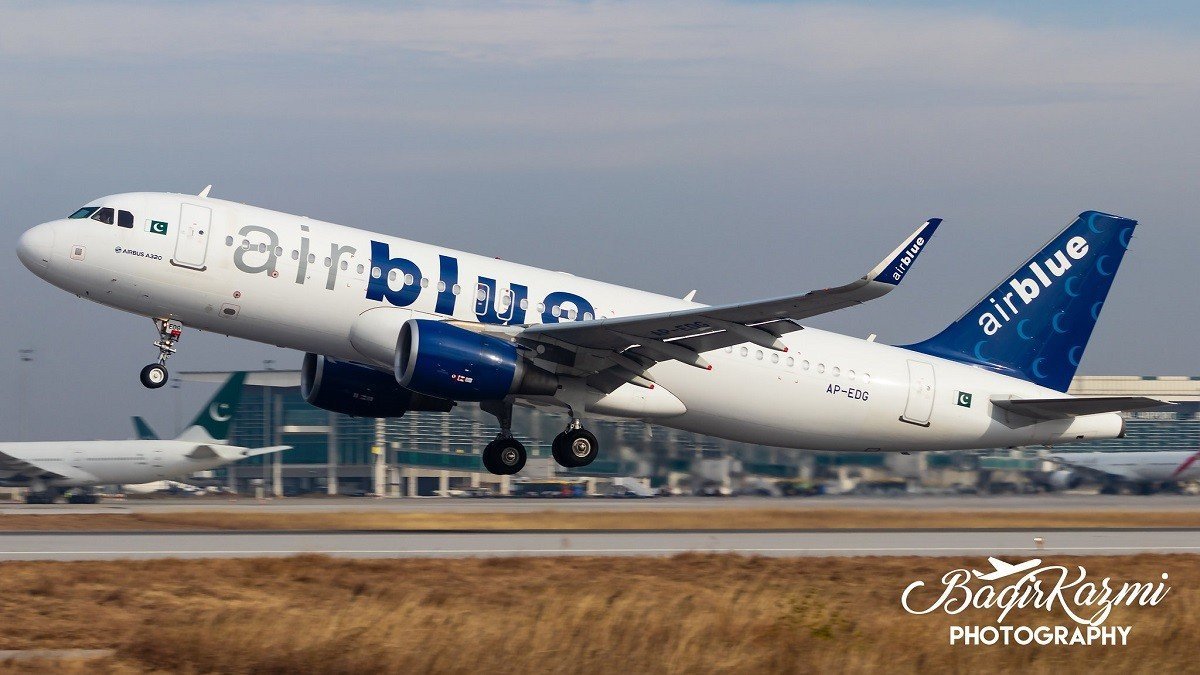
Image Credit: Baqir Aviation
Aviation is not only a fascinating yet equally delicate and sensitive field. In this field, a single error ignites the whole chain of errors that ultimately leads to an incident or an accident. Among these accidents, almost 80% involve human factors that contribute to unfortunate happenings. In order to avoid human errors, airlines make sure that their employees undergo Crew Resource Management (CRM) Training. CRM is the effective utilization of all available resources by flight crew personnel in a manner that ensures safe operations, mitigates errors, eliminates stress, and amplifies efficiency. The major focus of CRM training revolves around inculcating strong interpersonal skills like communication, effective leadership, decision-making, problem-solving, and situational awareness among the flight and ground crew. History shows that whenever an airline failed to follow CRM protocols, it experienced undesirable events. The same happened to a scheduled flight of Pakistan’s largest private carrier, i.e., Airblue Airline. The Airblue flight 202, involving aircraft A321, faced a similar condition in the cockpit when it crashed near Marga La Hills
Read More: Airblue Brand New Airbus A321neo
Nomenclature of Airblue Flight 202
Based in Islamabad, Airblue is Pakistan’s largest private carrier and shares almost 30% of the overall domestic market. It possesses a fleet of almost 11 aircraft consisting of A320 and A321. Domestic operations of Airblue cover different destinations like Lahore, Karachi, Islamabad, Peshawar, and Multan. Flight 202 was a scheduled flight of airblue between Jinnah International Airport, Karachi, and Benazir Bhutto International Airport, Islamabad. The aircraft involved in this flight was an Airbus A321 carrying 146 passengers and 6 crew members. During the descent phase at Benazir Bhutto International Airport, Islamabad, this unfortunate plane crashed into Islamabad Margalla Hills, killing all the souls on board.
Root Cause of Airblue A321 Crash
The purpose of investigating an accident is to find out the root cause of that ill-fated happening with the intention of preventing it from occurring again. Investigators found that A321 was technically fit to fly, but the Cockpit Voice Recorder recorded the snobbish tone and harsh words of the captain. The plane crashed during a fumbled circling approach to runway 12 when the Pilot-In-Command deviated from the standard landing procedures and inexplicably continued flying towards Margalla Hills.
From the initial stages of flight, the captain tried to test the intelligence of the first officer in a discourteous manner. By dominating through his assertive behavior, he boosted the confidence of his cockpit partner. That’s the reason the first officer could not interfere while witnessing the wrong commands given by his captain. This resulted in the loss of situational awareness as neither of the crew got the reason for the warnings of the Ground Proximity Warning System. Owing to the authoritative style of leadership exhibited by the captain, the first officer could not point out the violation of standard landing procedures. Since the cockpit crew did not communicate effectively, they could not brainstorm to identify and solve the problem. Consequently, the captain continued believing his false assumptions and his wrong approach annihilated airblue’s A321 and 152 people. The series of errors made by the cockpit crew showed that a lack of CRM training caused airblue to bear this deadly accident.